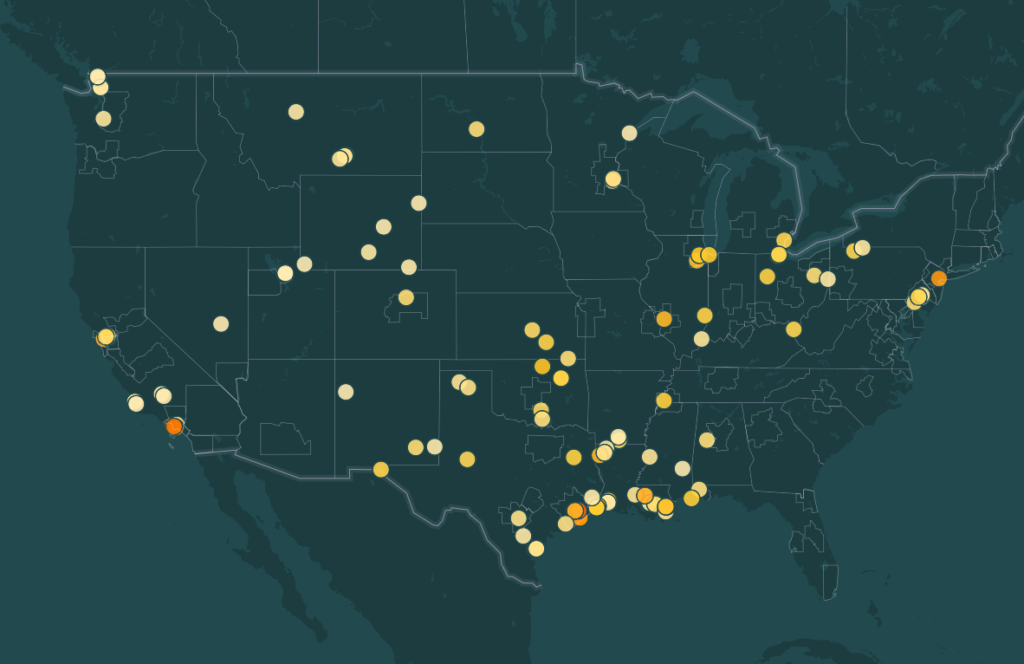
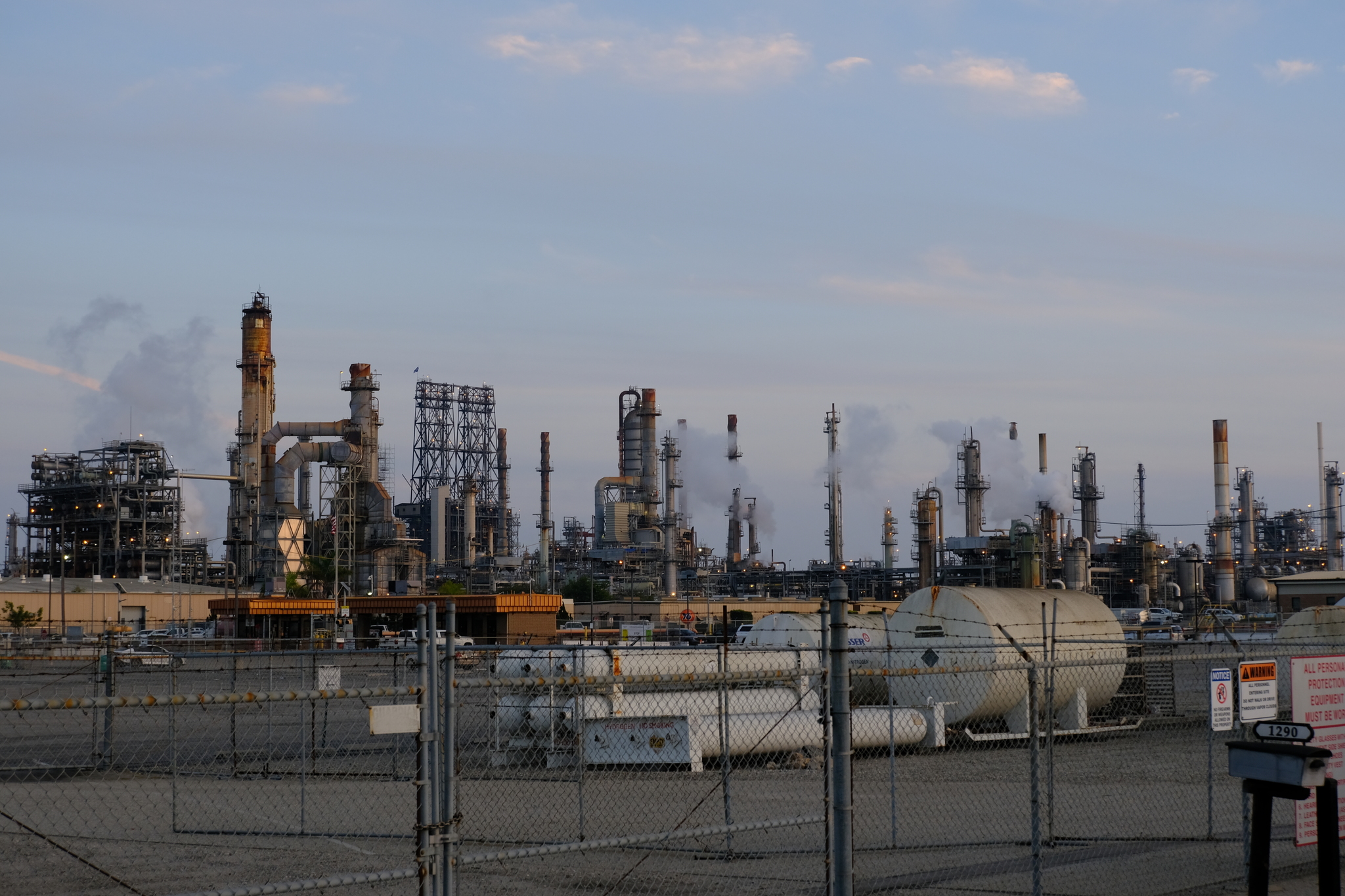
The U.S. is the world’s largest producer and consumer of petroleum and home to roughly a fifth of the world’s refining capacity. Oil refineries are among the largest stationary sources of air pollutants in the country and are disproportionately located in low-income communities and communities of color. Prior studies have linked exposure to air pollution from oil refineries with harmful health outcomes including asthma, cardiovascular disease, emergency department visits and hospitalizations, cancer, and premature death.
CHAIRS is a collaboration between the University of California (Los Angeles and Berkeley), PSE Healthy Energy, the Asian Pacific Environmental Network, Communities for a Better Environment, and Healthy Martinez to leverage recent oil refinery closures in California and air quality modeling to determine how refinery operations impact the health of surrounding communities.
Current objectives:

Determine
how rates of adverse birth outcomes and emergency department visits changed after past refinery closures in California.

Estimate
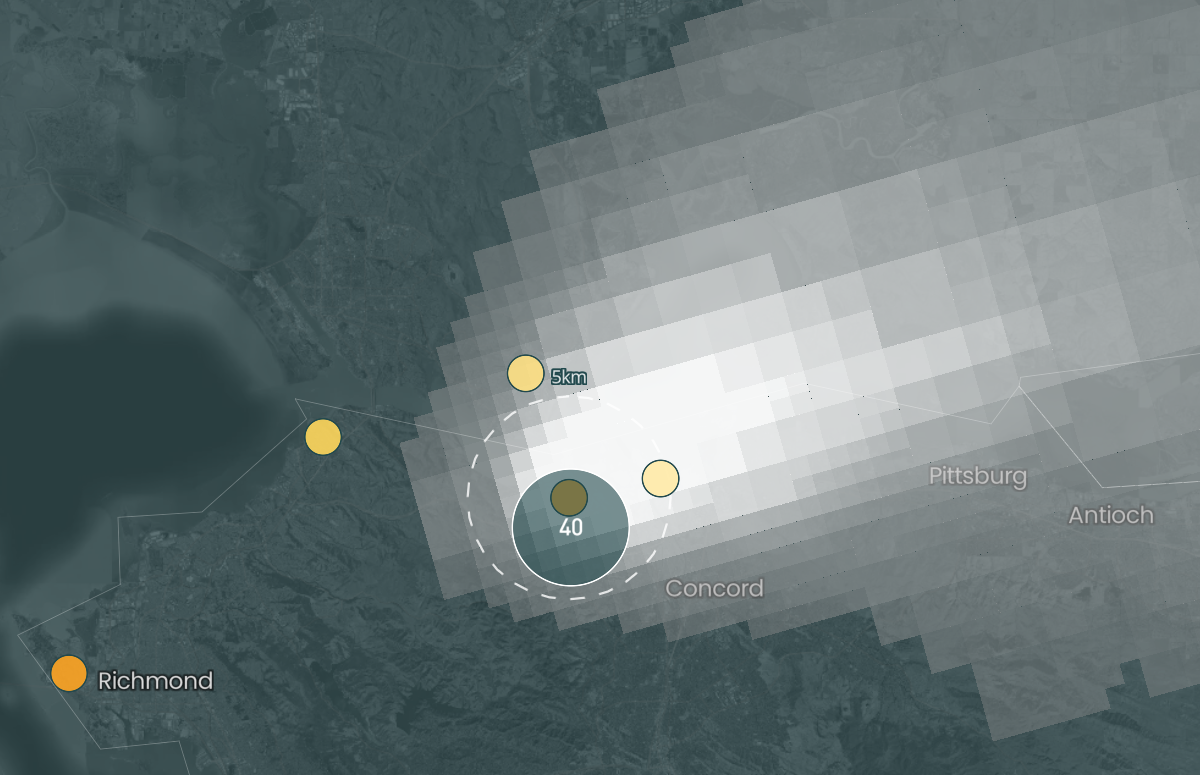
air quality, health, and economic impacts of California oil refineries and compare them to alternative scenarios of retirement or retrofit to biofuel production.

Advance
community capacity and public policy through the engagement of community members in the study design and dissemination of results.